
If you’re looking to strengthen your crypto security, understand advanced wallet protections, and avoid costly mistakes, this guide is built for you. As digital assets continue to grow in value and complexity, knowing how to implement a multi-signature wallet setup is no longer optional for serious investors—it’s essential.
Many token holders struggle with wallet vulnerabilities, unclear setup processes, and confusion around key management. This article breaks down exactly how multi-signature structures work, why they reduce single points of failure, and how to configure them properly for both individual and collaborative use.
Our insights are based on in-depth analysis of leading blockchain protocols, hands-on testing of wallet configurations, and continuous tracking of security trends across Asia-focused crypto ecosystems. By the end, you’ll understand how to secure your assets with greater confidence, minimize operational risk, and apply best practices that align with today’s evolving blockchain standards.
Standard crypto wallets hinge on a single private key. Lose it, leak it, or mis-store it, and your funds vanish—irreversible, no help desk, no chargeback (ask anyone who fumbled a seed phrase during a Bangkok token launch). That single point of failure haunts both solo traders and Singapore-based DAOs.
The fix is a multi-party approval system, better known as a multi-signature wallet setup—an institutional-grade safeguard favored by exchanges and OTC desks.
By combining:
• distributed key holders
• predefined approval thresholds
you create layered resilience. By the end, you’ll understand how to design a hardened, multi-layered protocol that protects capital.
Understanding Multi-Signature Wallets: How They Work
At its core, a multi-signature wallet (often called “multisig”) is a crypto wallet that requires more than one approval to move funds. Think of it like a bank safe deposit box that needs two keys—one held by you and one by the bank manager. Without both, the box stays locked. Similarly, a multisig wallet won’t release funds unless multiple authorized parties sign off.
Now, let’s break down the M-of-N concept. “M” represents the required approvals, and “N” is the total possible signers. For example:
- 2-of-3 wallet: Any two out of three designated signers must approve a transaction.
- 3-of-5 wallet: Three approvals are needed from a pool of five.
This structure adds redundancy and protection. Even if one key is lost—or one person goes rogue—the funds remain secure. (Yes, it’s basically the Avengers assembling before anything major happens.)
Technically speaking, this isn’t just a software add-on. The blockchain address itself is programmed to require multiple valid cryptographic signatures before broadcasting a transaction. In other words, security is baked into the protocol.
So what should you do? If you manage shared funds, run a DAO, or hold significant assets, consider a multi-signature wallet setup. Pro tip: Start with 2-of-3 for balanced security and flexibility.
The Core Benefits: Why Multi-Party Approval is Essential
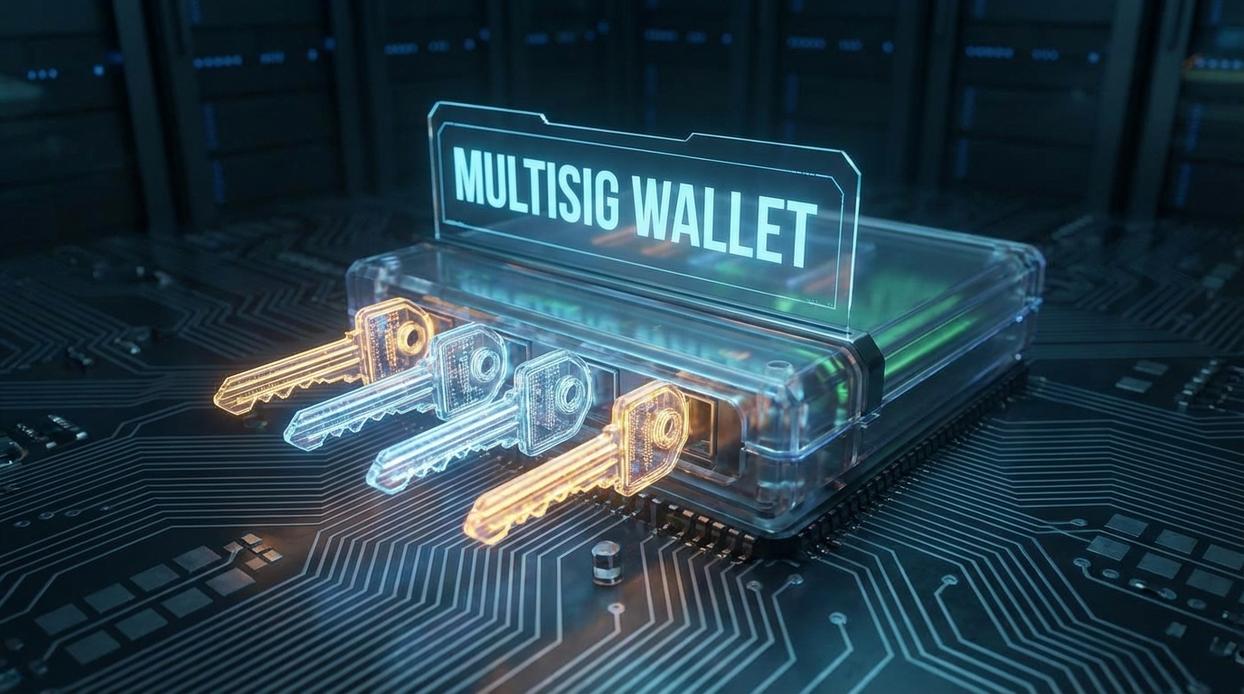
Back in 2019, when several high-profile exchange hacks made headlines, one lesson became painfully clear: a single private key is a single point of failure. Multi-party approval—often called multi-signature (or “multi-sig”)—solves that by requiring M-of-N signatures, meaning a minimum number (M) of approved signers out of a total group (N) must authorize a transaction.
Enhanced Security Against Theft
First and foremost, security improves exponentially. If a hacker gains access to one key, it’s useless without the others. Compromising multiple separately stored keys takes significantly more time, coordination, and luck (and criminals prefer easy targets).
Redundancy and Loss Prevention
Equally important, redundancy protects against human error. Lose one key? Funds aren’t gone—as long as the M-of-N threshold can still be met. After a breach or loss, teams can initiate a new multi-signature wallet setup and restore full protection.
Secure Escrow and Business Transactions
Meanwhile, multi-sig enables escrow without blind trust. Two transacting parties plus a neutral third-party arbiter create a system where the third signature is only used if a dispute arises.
Collaborative Fund Management
For businesses, DAOs (decentralized autonomous organizations), or families, shared approval prevents unilateral withdrawals.
| Benefit | Why It Matters |
|---|---|
| Theft Protection | No single point of failure |
| Key Redundancy | Prevents permanent loss |
| Escrow Capability | Dispute resolution without custody |
| Shared Governance | Transparent spending control |
Some argue multi-sig slows decisions. However, in high-value environments, a short delay often beats irreversible loss.
A Practical Guide to Setting Up Your Multi-Signature Wallet
Security breaches aren’t rare in crypto. According to Chainalysis (2023), over $3.8 billion was lost to crypto hacks in 2022 alone. That’s precisely why a multi-signature wallet setup—requiring multiple approvals before funds move—has become a gold standard for serious holders.
Step 1: Choosing the Right Platform
First, decide where your wallet will live:
- Desktop wallets for advanced control
- Mobile wallets for convenience
- Hardware-integrated wallets for cold storage security
Research matters here. Well-audited, open-source wallets reduce hidden vulnerabilities (a lesson reinforced after the 2020 KuCoin breach). Look for platforms supporting major chains like Bitcoin and Ethereum, plus fast-growing Asian blockchain ecosystems such as BNB Chain and Polygon.
Some argue hardware wallets alone are enough. While hardware devices are secure, adding multi-sig reduces single-point-of-failure risk (think of it as requiring two keys to launch the missiles—minus the Hollywood drama).
Step 2: Creating the Wallet and Defining Rules
Next, generate your first private key. Then either:
- Invite trusted co-signers (family, partners, executives), or
- Generate additional keys yourself across separate devices
Each signer receives a unique key. No single key can move funds alone—that’s the core protection mechanism.
If you’re new to wallet creation basics, review this step by step guide to setting up a secure crypto wallet before proceeding.
Step 3: The M-of-N Configuration
Here’s where strategy matters. “M-of-N” means M required approvals out of N total keys.
- 2-of-3: Ideal for individuals wanting redundancy
- 3-of-5: Suitable for startups or DAO-style teams
Research from institutional custody providers shows distributed authorization significantly reduces insider theft risk.
Step 4: Securely Backing Up Every Key
This is non-negotiable. Store each seed phrase separately:
- Engraved steel backups (fire-resistant)
- Different geographic locations
- Encrypted digital vaults
Never store all keys together. Each key is its own security responsibility (yes, even if it feels excessive).
Done correctly, you dramatically reduce both hacking and human error risk.
Even the strongest security model has weak spots. In a multi-signature wallet setup, you need a minimum number of keys—called the M threshold—to approve a transaction. If too many keys are lost and you fall below that number, the funds are permanently locked. No password reset. No help desk.
To reduce risk:
- Create encrypted digital and offline backups.
- Store each key in different geographic locations to guard against fire or flood.
- Choose co-signers you deeply trust to limit collusion risk.
Pro tip: test recovery procedures annually. Human trust still matters in shared financial control systems and governance.
You now have the complete framework to move beyond basic wallet hygiene and implement a true M-of-N defense. The old model—a single private key guarding everything—was convenient, but dangerously fragile (one phishing link and it is game over). In crypto hubs like Singapore and Hong Kong, desks treat multi-party approval as standard operating procedure for treasury control.
• CONDUCT A SECURITY AUDIT
• Document every seed phrase location
A properly configured multi-signature wallet setup distributes trust, eliminating single-point failure. Pro tip: test with a small on-chain transaction before migrating major holdings. Activate your DIGITAL FORTRESS and move forward. Today. Now.
Stay Ahead in Crypto With Smarter, Safer Moves
You came here to understand today’s crypto trends, token strategies, and how Asia-focused blockchain innovation is shaping the next wave of opportunity. Now you have a clearer picture of where momentum is building, how token investments fit into a broader strategy, and why secure infrastructure is non-negotiable.
The reality is this: fast-moving markets reward the prepared and punish the careless. Without a clear strategy and proper wallet protection, even the best token insight can turn into unnecessary risk. That’s the pain point most investors face — opportunity on one side, security concerns on the other.
The smart move is simple. Apply what you’ve learned. Track emerging protocols. Validate token fundamentals. Strengthen your storage with a multi-signature wallet setup so your assets are protected as you scale.
If you’re serious about navigating crypto with confidence, now is the time to act. Use proven strategies, follow data-driven trend tracking, and implement secure wallet systems trusted by experienced investors. Don’t wait for volatility to expose weak preparation — secure your positions, refine your strategy, and move forward with clarity today.