
Crypto isn’t just about Bitcoin and Ethereum anymore—and 2024 is proving it.
If you’re trying to understand where the market is actually heading, the headlines aren’t helping. This article breaks down the five most significant trends shaping the cryptocurrency market right now, moving beyond the usual narratives to uncover what’s truly driving momentum. We cut through the noise and hype to give you a clear, actionable framework for spotting where smart capital is flowing and which technologies are gaining real traction.
This analysis is grounded in deep dives into on-chain data, global capital flows, and protocol development activity—not price speculation.
You’ll leave with a precise understanding of the current emerging crypto market trends, so you can make smarter investment and research decisions with confidence.
Trend 1: The Tokenization of Real-World Assets (RWA)
Let’s start with the basics.
Tokenization of real-world assets (RWA) means converting ownership rights to physical or traditional financial assets—like real estate, U.S. Treasury bonds, or private equity—into digital tokens recorded on a blockchain. A token is simply a blockchain-based representation of value or ownership. Think of it as turning a paper deed or bond certificate into programmable digital shares.
So why is this suddenly everywhere?
Because trillions of dollars sit in traditional finance (TradFi), often locked behind slow settlement times and high minimum investments. By bringing these assets on-chain, investors gain liquidity (easier buying and selling), accessibility (fractional ownership), and transparency (public ledgers). According to Boston Consulting Group, tokenized assets could reach $16 trillion by 2030.
One standout example? Tokenized U.S. Treasury Bills. They’ve become a DeFi “killer app,” offering stable, government-backed yield inside crypto wallets—no brokerage account required. In a volatile market, that’s the equivalent of finding Wi-Fi in the wilderness.
Now, you might wonder: is this just another buzz cycle in emerging crypto market trends? Skeptics argue regulatory risk and counterparty exposure remain real. They’re not wrong. That’s why due diligence matters.
When evaluating an RWA protocol, look closely at:
- Underlying asset quality
- Oracle reliability (price feeds that connect blockchain to real-world data)
- Regulatory compliance framework
Next question you should ask: how will global regulators shape this space—and which regions move first? Pro tip: watch jurisdictions actively approving tokenized funds. That’s usually where momentum builds.
Trend 3: The Rise of Asia-Focused Protocols and Regulatory Clarity
The Geographic Shift is real—and measurable.
Over the past few years, hubs like Hong Kong, Singapore, and Japan have rolled out clearer licensing regimes for exchanges and virtual asset service providers. Regulatory clarity (clear, published rules on how crypto businesses can operate legally) reduces uncertainty for founders and investors. According to Chainalysis’ 2023 Geography of Crypto Report, parts of Asia have consistently ranked among the highest in grassroots and institutional adoption.
Some critics argue regulation slows innovation. In certain cases, heavy compliance costs can deter smaller startups. But ambiguity is worse. When companies know the rules, capital follows (and so does talent).
Unique Market Dynamics
Asian markets often lean into blockchain gaming, mobile-first DeFi, and exchange-integrated ecosystems. In contrast to Western markets’ obsession with “ultra-pure decentralization,” many Asian users prioritize usability, rewards, and ecosystem perks. Think less “crypto-anarchist manifesto,” more “super app with yield.”
Protocols gaining traction include:
- Gaming-focused Layer 1s and Layer 2s
- Real-world asset tokenization platforms
- Yield-generating DeFi tailored for retail participation
These projects succeed by aligning with local payment habits and mobile dominance.
Pro tip: Watch user growth metrics and regional wallet downloads before token price charts. Adoption usually precedes price.
For investors tracking emerging crypto market trends, Asia often acts as a leading indicator. Capital rotation, exchange listings, and user behavior patterns here frequently echo globally months later. Reviewing the weekly digital asset market recap key metrics that matter can help you spot those early signals before they hit Western headlines.
Trend 4: The Convergence of Artificial Intelligence (AI) and Crypto

At first glance, AI and crypto look like two separate hype cycles colliding. However, the deeper thesis is more practical: AI needs decentralized infrastructure, and crypto can provide it. Artificial Intelligence (AI)—systems that learn and make decisions from data—requires massive compute power and trustworthy data pipelines. Blockchains, as decentralized ledgers, offer transparent coordination and payment layers without centralized gatekeepers.
Consider decentralized physical infrastructure networks (DePIN), where individuals supply GPU power for AI model training and get paid in tokens. Instead of relying solely on Big Tech cloud providers, compute becomes globally distributed. Then there are AI agent economies on-chain—autonomous programs transacting with each other—and verifiable computation, which mathematically proves an AI output hasn’t been tampered with.
That said, this sits squarely within emerging crypto market trends, and speculation runs hot. Many projects simply rebrand with “AI” (classic AI-washing). Look for real usage metrics, audited code, and actual demand—not just glossy pitch decks (if it sounds like sci‑fi with no users, pause).
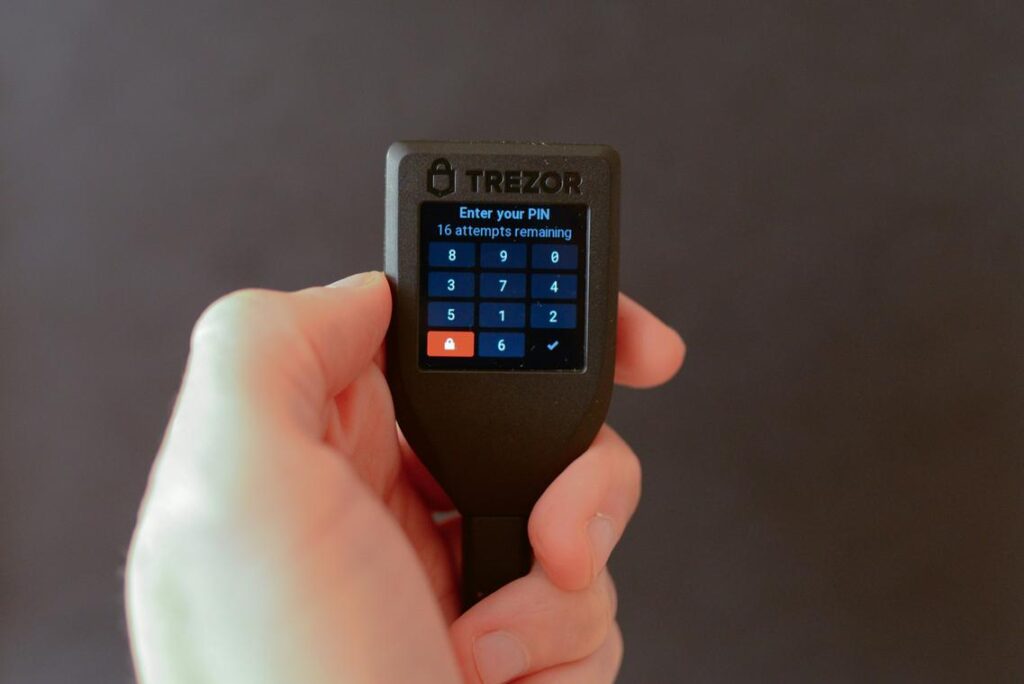
Trend 5: Advanced Wallet Security and Self-Custody
As crypto portfolios grow, so does attacker sophistication. Phishing kits, SIM swaps, and smart contract exploits are no longer rare—they’re routine (Chainalysis, 2024). So the conversation has shifted from whether to self-custody, to how to secure it properly.
Traditionally, wallets relied on a seed phrase—a 12–24 word master key. Lose it, and you’re locked out. Leak it, and you’re drained. However, Smart Contract Wallets (wallets controlled by programmable code) and Multi-Party Computation (MPC)—where private keys are split into encrypted shards—are changing the game.
In contrast to basic wallets, these offer social recovery, transaction bundling, and gas fee abstraction (yes, fewer pop-ups asking you to approve everything like it’s 2017). Pro tip: Always verify independent security audits before trusting new tech.
Still, critics argue added complexity increases risk. Fair. But properly audited smart wallets often reduce single points of failure.
When evaluating a wallet, ask:
- Has it been audited?
- How does recovery work?
- Which blockchains does it support?
As emerging crypto market trends evolve, security isn’t optional—it’s your edge.
Positioning Yourself for the Next Crypto Cycle
You came here to understand what’s truly driving the next phase of crypto—and now you have a clear framework. From RWAs and L2s to the influence of AI and Asia, these are the structural forces reshaping the market beyond short-term hype.
The real challenge is speed. Crypto moves fast, and reacting to every price swing is exhausting and ineffective. But when you focus on these core technological and geographical shifts, you gain a steadier lens for decision-making.
By looking past daily charts and tracking underlying adoption, infrastructure growth, and regional momentum, you put yourself in position to identify long-term value while managing volatility.
Don’t let rapid market shifts catch you off guard. Stay focused on these key trends, secure your assets properly, and take control of your strategy now—because those who prepare early are the ones who capitalize on the next cycle.