

If you’re searching for a clear asia layer-1 comparison, you’re likely trying to cut through the noise surrounding the region’s fastest-growing blockchain ecosystems. With new protocols launching, token incentives shifting, and developer activity accelerating across Asia, it’s becoming harder to distinguish real infrastructure innovation from short-term hype.
This article is designed to give you a focused, side-by-side look at leading Asia-based Layer-1 blockchains—examining their consensus models, scalability approaches, tokenomics, ecosystem growth, and real-world adoption. Instead of surface-level summaries, we break down what actually matters for investors, builders, and long-term token holders.
Our insights are grounded in continuous trend tracking, protocol analysis, and active monitoring of on-chain data and ecosystem development across Asian markets. By the end, you’ll have a clearer framework for evaluating strengths, trade-offs, and strategic positioning—so you can make informed decisions with confidence in a rapidly evolving blockchain landscape.
The Incumbents: How Global Giants are Localizing for Asia
When people talk about Asia’s crypto future, they often focus on shiny new Layer-1s promising faster speeds and lower fees. But incumbents like Ethereum and BNB Smart Chain aren’t fading quietly. They’re ADAPTING — and that creates real advantages for builders and investors alike.
Ethereum: Enterprise Depth in Japan and South Korea
Ethereum (a decentralized blockchain that supports smart contracts, or self-executing code) has doubled down on enterprise and DeFi integration across Japan and South Korea. Major corporations in both markets use Ethereum-based solutions for tokenization, supply chain pilots, and financial infrastructure experiments (Consensys, 2023).
Critics argue Ethereum’s gas fees remain too high. That’s fair. Yet its deep developer base and institutional trust act as a competitive moat. In asia layer-1 comparison conversations, Ethereum consistently wins on:
- Security track record
- Developer tooling
- Institutional credibility
For enterprises, that stability reduces operational risk (and no CFO wants to explain a blockchain failure at a board meeting).
BNB Chain: Speed and Scale in Southeast Asia
BNB Chain has taken a different route — aggressively targeting Web3 gaming and payments across Southeast Asia. Its low transaction fees and high throughput make microtransactions viable, a huge plus in gaming-heavy markets (BNB Chain Ecosystem Report, 2024).
Some say newer protocols are faster. True. But BNB’s massive user base creates built-in liquidity and distribution — a powerful growth engine.
For readers exploring broader ecosystem dynamics, see the role of web3 startups in asias crypto ecosystem.
The benefit? You gain exposure to PROVEN networks that localize smartly — blending global scale with regional strategy.
The Challengers: High-Throughput Protocols Targeting Asian Markets
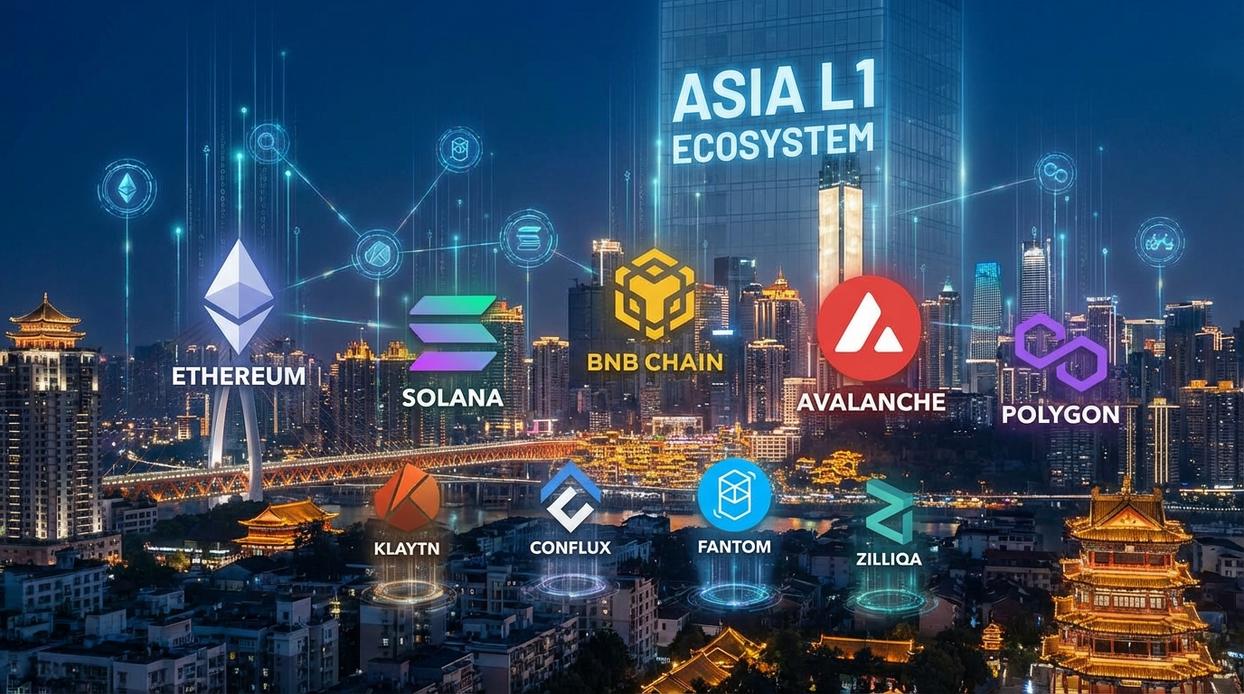
As Ethereum congestion pushed fees higher, a new cohort of Layer-1 blockchains emerged promising speed and scale. Solana, Aptos, and Sui are leading contenders, each engineered for high-throughput performance. In simple terms, high throughput means the ability to process thousands of transactions per second (TPS) without slowing down. For regions like Asia—where GameFi, trading apps, and social platforms generate massive microtransactions—this capability isn’t optional; it’s foundational.
Solana leverages parallel transaction processing through its Sealevel runtime, enabling thousands of smart contracts to execute simultaneously. Meanwhile, Aptos and Sui utilize the Move language, a smart contract framework designed for safety and resource efficiency. Move reduces common vulnerabilities (a critical edge after high-profile exploits cost the industry over $3.8B in 2022, per Chainalysis).
For example, Vietnam-based game studios have deployed on Solana to minimize latency for in-game asset trading. Similarly, several Singapore Web3 social startups chose Sui for near-instant finality, reporting smoother onboarding and lower gas friction.
| Protocol | Key Advantage | Popular Use Cases in Asia |
|———–|—————|—————————|
| Solana | Parallel execution | GameFi, NFT markets |
| Aptos | Move safety model | DeFi, social apps |
| Sui | Object-centric scaling | Gaming, digital assets |
However, critics argue Ethereum’s ecosystem depth still outweighs raw speed. That’s fair—network effects matter. Yet, asia layer-1 comparison shows developers increasingly prioritize user experience over maximal decentralization trade-offs.
Looking ahead (speculation), grant programs and hackathons in Hong Kong and Singapore will likely accelerate ecosystem maturity. If local developer growth continues at its current pace, these high-throughput chains could dominate Asia’s consumer-facing Web3 sector within five years.
A Strategic Framework for Evaluating Layer-1s in Asia
Most comparisons between Layer-1 blockchains stop at headline TPS numbers. That’s like judging a Formula 1 car by top speed alone (great on a straightaway, less helpful on a tight circuit). A serious asia layer-1 comparison demands a multi-factor lens—especially in markets as nuanced as Japan, South Korea, Singapore, and China.
Criterion 1: Technical Performance & Scalability
Transaction per second (TPS) measures throughput, while time-to-finality defines how quickly transactions become irreversible. Transaction costs, meanwhile, determine economic feasibility.
- DeFi prioritizes fast finality and low fees to reduce slippage and arbitrage risk.
- Gaming values high TPS and predictable costs to support microtransactions at scale.
Some argue TPS is inflated marketing—after all, real-world throughput is often lower (Electric Capital Developer Report, 2023). True. But ignoring peak capacity overlooks future scalability ceilings. The key is sustainable throughput under load, not lab conditions. Pro tip: look for stress-test data and mainnet congestion history, not just whitepaper claims.
Criterion 2: Ecosystem & Community Vitality
Technical merit means little without builders and users. Assess:
- Local-language documentation and support channels
- Availability of SDKs and audited developer tooling
- Active wallet addresses and developer commits (GitHub data remains a reliable proxy)
In South Korea, gaming-centric chains thrive due to culturally aligned Web3 adoption (DappRadar, 2024). In Japan, developer compliance standards often influence tooling maturity. Many competitors overlook linguistic accessibility—but documentation in Korean or Japanese often predicts regional traction more accurately than global Twitter metrics.
Criterion 3: Regulatory Navigation & Enterprise Adoption
Regulatory posture is a differentiator. Singapore’s MAS provides structured licensing pathways; Japan enforces rigorous token screening; China restricts public crypto while supporting blockchain infrastructure.
Enterprise partnerships—such as integrations with telecoms or payment providers—signal institutional confidence. Critics say enterprise deals are “PR theater.” Sometimes they are. But long-term pilots and regulatory approvals indicate durable positioning in complex Asian markets.
The edge lies in evaluating all three dimensions together—not in isolation.
Stay Ahead in Asia’s Blockchain Evolution
You came here to make sense of the fast-moving blockchain landscape across Asia — and now you have a clearer view of the protocols, token strategies, and infrastructure shaping the region. From understanding emerging trends to evaluating security practices and wallet setups, you’re better equipped to navigate opportunities with confidence.
The real challenge isn’t access to information — it’s knowing which signals matter and how to act before momentum shifts. Missing the right protocol launch, token cycle, or ecosystem update can mean falling behind in one of the most competitive crypto markets in the world.
That’s why staying current with in-depth research, practical strategy breakdowns, and a reliable asia layer-1 comparison is essential. When you consistently track performance metrics, ecosystem growth, and token utility across leading chains, you position yourself ahead of reactive investors.
If you’re serious about capitalizing on Asia-focused blockchain growth, now is the time to act. Explore the latest trend reports, refine your token strategy, and implement secure wallet structures today. Join thousands of informed investors who rely on data-driven insights to reduce risk and uncover high-potential opportunities — and start making smarter crypto moves now.