
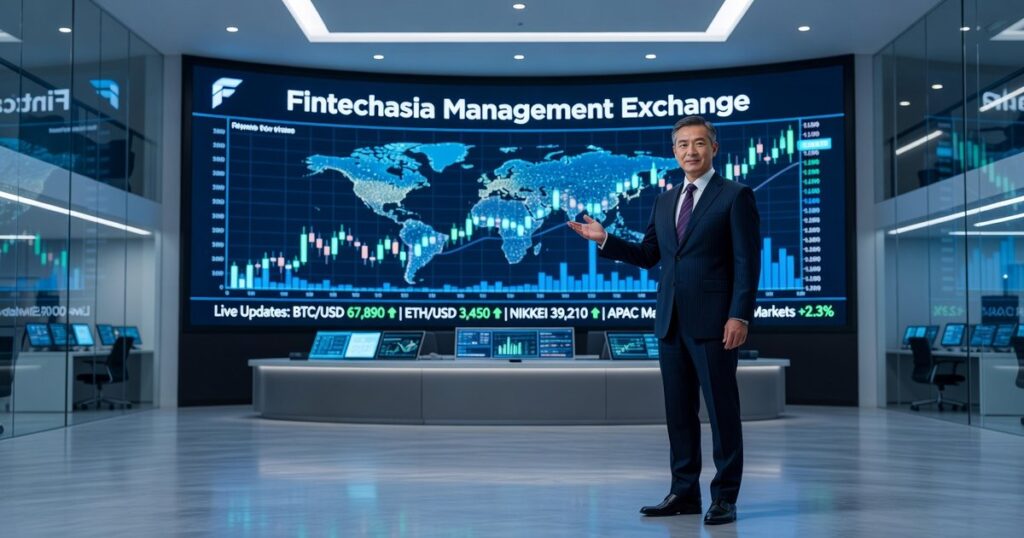
I’ve been tracking how people manage their money across Asia for years now. And here’s what stands out: the gap between what exchanges offer and what people actually need keeps shrinking.
You’re probably tired of jumping between five different apps just to trade, save, and manage your digital assets. Most people are.
The ftasiamanagement exchange by fintechasia landscape has changed. These platforms aren’t just places to buy and sell anymore. They’ve become full financial management tools.
I spent months researching how Asian fintech companies are building these services. I looked at their blockchain protocols, tested their security setups, and mapped out what they actually offer beyond basic trading.
This guide shows you the specific exchange services that can simplify your financial life. You’ll see how to manage digital assets without the platform hopping and which opportunities in the Asian market are worth your time.
I focus on Asia-focused market trends and blockchain protocols because that’s where the most interesting developments are happening right now. The research here comes from tracking real platforms and how people actually use them.
No fluff about the future of finance. Just what’s available today and how you can use it.
The New Paradigm: From Simple Trading Platforms to Integrated Financial Hubs
Remember when exchanges just let you swap one coin for another?
Those days are gone.
I’m watching platforms transform into something completely different. They’re not just places to trade anymore. They’re becoming full financial hubs where you can do almost everything you’d do at a traditional bank.
Here’s what that means for you.
You can now earn interest on your holdings. Take out loans using your crypto as collateral. Pay bills directly from your account. Some platforms even offer debit cards (which honestly feels wild when you think about it).
The shift is most visible in Asia. And there’s good reason for that.
The region has sky-high digital adoption rates. People there jumped straight to mobile banking without going through the desktop phase most Western countries experienced. That mobile-first mindset created perfect conditions for platforms like Ftasiamanagement exchange by fintechasia to build services people actually want to use.
Regulatory sandboxes in places like Singapore and Hong Kong help too. They let companies test new features without drowning in red tape.
What you get from all this:
• One platform for everything instead of juggling five different apps
• Lower fees because you’re not moving money between services
• Faster transactions since everything happens in one ecosystem
The old model made you choose. Trading here. Savings there. Lending somewhere else.
Modern platforms at ftasiamanagement bundle it all together. You manage your entire digital asset life from one dashboard.
That’s the real benefit. Simplicity without sacrificing options.
Core Exchange Services for Comprehensive Financial Management
Walk into any modern exchange platform and you’ll notice something right away.
The interface feels different than it did even two years ago. Cleaner. More options stacked in neat rows across your screen.
Multi-asset trading used to mean Bitcoin and maybe Ethereum. Now you’re looking at dozens of major cryptocurrencies, emerging tokens that weren’t around last quarter, and sometimes even tokenized real-world assets like property shares or commodities. As the landscape of multi-asset trading evolves to include a plethora of cryptocurrencies and even tokenized real-world assets, platforms like Ftasiamanagement are becoming essential for navigating this complex and rapidly changing market. As the landscape of multi-asset trading evolves to include a vast array of cryptocurrencies and tokenized assets, platforms like Ftasiamanagement are leading the charge in helping traders navigate this dynamic new frontier.
Here’s the simple breakdown.
Spot trading means you buy the actual asset. You click buy, the tokens land in your account, and they’re yours. Derivatives trading is different. You’re betting on price movements without owning the underlying asset (think of it like predicting weather patterns instead of actually standing in the rain).
The ftasiamanagement exchange by fintechasia offers both options depending on what you’re trying to accomplish.
Yield generation is where things get interesting for people who don’t want to trade every day.
You can stake certain tokens, which basically means locking them up to help secure a network. In return, you earn rewards. Savings accounts work similarly but with more flexibility. You deposit, you earn interest, you can usually withdraw whenever you want.
Liquidity pools are a bit more involved. You provide trading pairs to help others trade, and you collect fees from those transactions.
Some people argue passive income in crypto isn’t really passive because you’re taking on price risk. Fair point. But if you’re holding ftasiamanagement money anyway, earning returns while you hold makes sense.
Fiat integration matters more than most people realize.
You need clean pathways between your bank account and your exchange wallet. Bank transfers that actually arrive. Card payments that don’t get declined for no reason. And when you want to cash out, you need off-ramps that work without making you jump through fifteen verification hoops.
That connection between traditional finance and digital assets? It’s what makes everything else possible.
Spotlight on Asia-Focused Blockchain Protocols and Token Investments
Here’s something most Western investors completely overlook.
Asian blockchain protocols aren’t just copycat projects with different names. They’re solving problems that don’t even exist in Western markets.
I’m talking about payment rails that work across Southeast Asian countries where traditional banking is a nightmare. Or gaming tokens that actually matter because mobile gaming is how millions of people socialize (not just a hobby).
Why Regional Protocols Matter
Some people will tell you that blockchain is global and location doesn’t matter.
They’re wrong.
I’ve watched projects absolutely explode in Singapore, South Korea, and Vietnam while barely registering a blip in the US. Why? Because they’re built for specific regulatory environments and user behaviors that only make sense if you understand the region. The stark contrast in gaming project success across regions, particularly the explosive growth seen in Southeast Asia, underscores the importance of tailored strategies, such as those driven by Ftasiamanagement Money, which align with local regulations and consumer preferences. The stark contrast in gaming project success can often be traced back to how well developers navigate regional nuances, particularly in markets like Southeast Asia where understanding Ftasiamanagement Money can make all the difference in achieving explosive growth.
The ftasiamanagement exchange by fintechasia gets this. They’ve structured their platform to give you access to tokens you literally can’t find on Coinbase or Kraken.
Look, I’m not saying every Asian protocol is gold. Most aren’t. But dismissing them entirely because you don’t recognize the names? That’s leaving money on the table.
How Exchanges Actually Help
Launchpads changed everything for retail investors. For the full picture, I lay it all out in Fintechasia Ftasiamanagement Money Tips.
Before IEOs (Initial Exchange Offerings), you had to navigate sketchy websites and hope you weren’t sending ETH to a scammer. Now exchanges vet projects before listing them. They’re not perfect, but it’s WAY better than the Wild West days.
When I look at ftasiamanagement economy news from fintechasia, I’m checking which projects are getting launchpad support. That tells me someone did at least basic due diligence.
Your Token Evaluation Checklist
Before you invest in ANY new token listing:
Check the utility. Does this token DO something or is it just speculation? If the only use case is “governance,” that’s usually a red flag.
Study the tokenomics. How many tokens exist? How many are locked? When do team tokens unlock? (This is where most people get wrecked.)
Gauge community support. Not Twitter bots. Real users in Telegram or Discord who actually understand the project. If everyone’s just asking “wen moon,” run.
I can’t stress this enough. Regional support matters MORE than global hype for Asia-focused protocols. A project with 50,000 active users in Vietnam is more valuable than one with 500,000 Twitter followers worldwide who’ve never used the product.
That’s just reality.
Security as a Service: Secure Wallet Setups and Asset Protection
Let me clear something up right away.
When people talk about crypto wallets, they throw around terms like custodial and non-custodial. But what does that actually mean?
A custodial wallet is when someone else holds your private keys. Think of it like a bank. You trust them to keep your assets safe, but they control access. If the platform goes down or gets hacked, you’re waiting on them to fix it.
Non-custodial wallets? You hold the keys. You control everything. Nobody can freeze your account or tell you what to do with your money.
The trade-off is simple. Custodial wallets are easier but you’re trusting a third party. Non-custodial wallets give you full control but if you lose your keys, nobody can help you recover your funds.
Here’s what’s changed though. Exchanges like ftasiamanagement exchange by fintechasia are now offering integrated non-custodial options. You get the convenience of an exchange interface with the security of controlling your own keys.
What exchanges actually do to protect you:
Most platforms now include multi-factor authentication (MFA for short). That’s when you need your password plus a code from your phone to log in. It stops hackers who only have your password.
Withdrawal whitelisting lets you create a list of approved addresses. Even if someone gets into your account, they can’t send funds to their own wallet.
Cold storage reserves mean the exchange keeps most funds offline where hackers can’t reach them. In the latest Ftasiamanagement Economy News From Fintechasia, experts emphasize that the implementation of cold storage reserves is a crucial strategy for exchanges aiming to safeguard their assets from potential hacking threats. In the latest Ftasiamanagement Economy News From Fintechasia, industry analysts underscore that maintaining robust cold storage reserves is essential for cryptocurrency exchanges to effectively protect their funds from potential cyber threats.
What you need to do:
- Use a password that’s actually strong (not your birthday or “password123”)
- Turn on every security feature available
- Watch for phishing emails that look real but aren’t
- Never share your authentication codes with anyone
The platform can build walls. But you still need to lock your own door.
Harnessing Asian Fintech for Smarter Financial Control
You came here looking for a better way to manage your digital assets.
I’ve shown you that ftasiamanagement exchange by fintechasia and similar platforms now give you everything in one place. Active trading, passive income, secure storage.
The complexity that used to hold people back? It’s gone when you work within a single ecosystem.
You can build a smarter financial strategy by bringing your activities together. No more jumping between platforms or losing track of your holdings.
Here’s what to do next: Look at your current setup and find one service that could work better for you. Maybe it’s staking or a high-yield savings product. Pick a reputable exchange and start there.
You’ll see how much simpler things get when your tools actually work together.
The Asian fintech space keeps moving forward. Your portfolio should too.