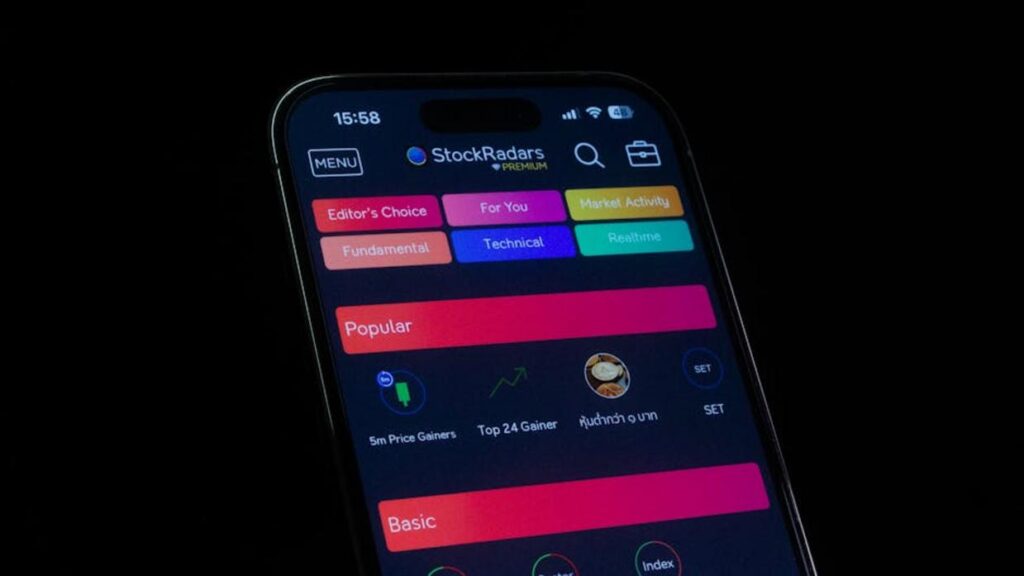

Short-Term Horizons (Days to Weeks): High-Risk, High-Reward Trading
Let’s be honest: this is the part of crypto that feels like a sport.
Short-term trading focuses on capturing profits from rapid price movements over days or weeks. It’s active, hands-on, and often intense (think less “set it and forget it,” more “refresh the chart again”). Unlike long-term investing, you’re not waiting for a project to mature—you’re trading volatility itself.
Strategy 1: Day Trading
Day trading involves entering and exiting multiple positions within a single day. The goal? Capture small price inefficiencies before the market corrects. This demands real-time chart monitoring, strong technical analysis skills, and emotional discipline. In my opinion, it’s one of the toughest ways to make money in crypto—transaction fees and overtrading eat beginners alive.
Strategy 2: Swing Trading
Swing trading stretches positions over several days or weeks to ride momentum shifts. Traders identify trends and enter during pullbacks, exiting near resistance levels. It’s slower than day trading but still fast-paced compared to investing. Personally, I find swing trading more sustainable for most people who can’t stare at charts all day.
Token Selection
High-volume, high-volatility tokens are preferred because liquidity ensures quick entries and exits. New listings can surge dramatically—but they can also collapse just as fast. That’s where understanding tokenomics how supply and demand drive value becomes crucial.
Key Tools & Concepts
You must understand order books (live buy/sell demand), candlestick charts (visual price action), and indicators like RSI (Relative Strength Index) and MACD (trend momentum tools). Risk management—especially stop-loss orders—is non-negotiable. Pro tip: define your exit before you enter.
Some argue short-term trading is just gambling. And yes, without discipline, it can be. But when compared to long-term vs short-term crypto strategies, the difference isn’t legitimacy—it’s time horizon and risk tolerance.
Best suited for experienced traders with time, resilience, and a strong stomach.
Medium-Term Horizons (Months to a Year): Trend and Narrative Following

If short-term trading feels like speed chess, medium-term investing is more like playing the long game in a tournament. You’re not reacting to every candle. You’re positioning for a move that unfolds over months.
What it is: A balanced strategy focused on capturing major market trends and narratives—like the rise of DePIN (Decentralized Physical Infrastructure Networks) or AI-focused tokens. A narrative is simply a widely shared belief about where the market is heading (think “AI will power everything” energy, but on-chain).
One investor told me, “I don’t care about today’s 5% dip. I care whether this sector will matter in six months.” That’s the mindset.
Strategy 1: Trend Following
Trend following means buying assets in a sustained uptrend and holding until momentum clearly breaks. As the old Wall Street saying goes, “The trend is your friend” (until it isn’t).
This requires:
- Patience to ride volatility
- Discipline to exit when structure changes
- Emotional control when social media screams “top!”
Critics argue trend following is “buying high.” Fair point. But data from multiple market studies shows momentum strategies have historically outperformed in many asset classes (see research by Jegadeesh & Titman, 1993). The key is risk management.
Strategy 2: Narrative Investing
Narrative investing focuses on sectors gaining traction—AI, DePIN, scaling solutions. It blends storytelling with fundamental analysis (evaluating technology, tokenomics, adoption potential).
“Follow the builders, not the hype,” one developer said during a token launch panel. That means reading roadmaps, tracking GitHub commits, and analyzing adoption metrics.
Token Selection & Tools
Within a hot sector, prioritize fundamentally strong projects. Watch:
- On-chain analysis (wallet flows, staking activity)
- Community engagement metrics
- Roadmap delivery
- Market cycles
Understanding regional innovation waves—especially in Asia-focused protocols—can offer timing advantages (rapid iteration cycles are common there).
Compared to long-term vs short-term crypto strategies, this approach balances conviction with adaptability.
Best for: Investors comfortable with research and volatility—without needing to check charts every hour.
Aligning Your Actions with Your Crypto Horizon
You came here to understand how to compare long-term vs short-term crypto strategies in a way that actually makes sense for your goals. Now you have a clear framework to evaluate short-, medium-, and long-term approaches without guessing.
One of the biggest reasons investors fail in crypto isn’t bad luck. It’s choosing a strategy that clashes with their timeline. Day trading with a long-term mindset. Holding long term with short-term expectations. That mismatch creates stress, impulsive decisions, and unnecessary losses.
When you align your tactics—whether it’s Day Trading, swing trading, or DCA—with your true time horizon and risk tolerance, everything becomes clearer. Your plan feels sustainable. Your decisions feel intentional. Your portfolio starts reflecting your strategy instead of your emotions.
Now it’s your move.
Define your time horizon honestly. Choose the strategy that fits it. Then start building your portfolio with confidence and clarity.
If you’re tired of second-guessing every market move, commit to the approach that matches your timeline today—and take control of your crypto journey.