
If you’ve ever bought a cryptocurrency based on buzz, social media hype, or a soaring price chart, you’re not alone. But price action alone doesn’t tell you whether a project is built to last. To truly evaluate a crypto asset, you need to look deeper—at its economic foundation.
That foundation is called understanding tokenomics.
Tokenomics is the economic framework that governs how a cryptocurrency is created, distributed, supplied, and incentivized. It determines whether a token is designed for long-term sustainability or short-term speculation. Yet many investors overlook it entirely.
This guide takes a clear, beginner-friendly approach to breaking down what tokenomics is, how it works, and why it matters. Drawing on data-driven crypto analysis and global blockchain trends—including innovative models emerging from Asian markets—you’ll learn how to separate structurally sound projects from potential bubbles.
By the end, you won’t just recognize the term. You’ll be confident in understanding tokenomics and using it to make smarter investment decisions.
The “Econ” in Tokenomics: Supply & Demand Dynamics
Token prices don’t move by magic. They move because of supply and demand. If you’re serious about understanding tokenomics, you need to look beyond hype and focus on how supply changes over time.
Inflationary vs. Deflationary Models
Inflationary tokens continuously mint new coins. This increases total supply. If demand doesn’t grow at the same pace, each token may lose value (basic economics, not crypto wizardry).
These models are often used to reward validators or users. For example, many proof-of-stake networks issue new tokens as staking rewards. The upside? Strong participation incentives. The risk? Dilution.
Practical tip: Before investing, check the token’s annual inflation rate. Compare it to network growth. If user adoption isn’t keeping up, inflation could outpace demand.
On the other side are deflationary tokens, where supply decreases over time. Bitcoin is the classic example. Its halving event—occurring roughly every four years—cuts new issuance in half, reducing incoming supply (Source: Bitcoin Whitepaper, Nakamoto, 2008). Scarcity is programmed in.
Critics argue scarcity alone doesn’t guarantee value (and they’re right). A scarce token with no utility is just a rare digital collectible. Demand must exist.
Burn Mechanisms: Actively Reducing Supply
Token burning permanently removes tokens from circulation, usually by sending them to an inaccessible wallet address.
Some projects fund burns using transaction fees. Binance, for instance, conducts regular BNB burns tied to platform activity (Source: Binance Whitepaper). This creates ongoing deflationary pressure.
Action step: Look for transparent burn schedules and on-chain verification. If burns depend on vague promises, that’s a red flag.
Staking & Yield: Incentivizing Scarcity
Staking rewards users for locking up tokens to support the network. Locked tokens reduce circulating supply, which can limit sell pressure.
Here’s how to use this strategically:
- Choose a reputable validator.
- Understand lock-up periods.
- Calculate real yield after inflation.
Staking aligns long-term holders with network growth. Less liquid supply often means more price stability (though not immunity—this isn’t a Marvel movie shield).
When supply mechanics, burns, and staking incentives work together, scarcity becomes structural—not accidental.
How to Analyze a Project’s Tokenomics: A Practical Checklist
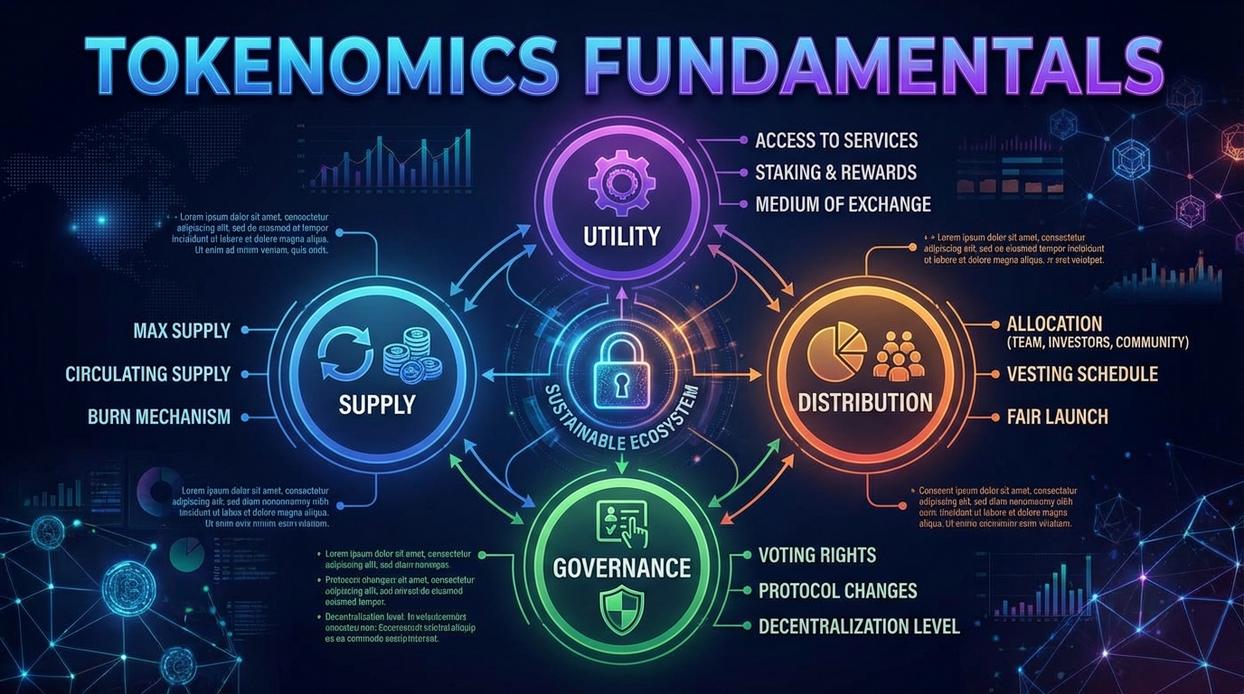
Tokenomics (a blend of “token” and “economics”) refers to how a crypto token is created, distributed, and sustained over time. And yes, it sounds technical—but it’s really about incentives. Who gets what, when, and why?
Let’s break it down step by step.
Step 1: Read the Whitepaper
First, find the official whitepaper. Then go straight to the “Tokenomics” or “Token Distribution” section. This is where the project must disclose supply, allocation, vesting, and utility.
If key numbers aren’t clearly documented, that’s a red flag (and not the fun, limited-edition kind). Transparency is non-negotiable in crypto. According to a 2022 Chainalysis report, opaque token structures are common in high-risk projects.
Step 2: Evaluate the Allocation Pie Chart
Next, examine the allocation breakdown.
As a rule of thumb, if more than 30–40% is allocated to the team and private investors, proceed carefully. Heavy insider ownership can create sell pressure once tokens unlock.
Of course, some argue large allocations align the team’s incentives with long-term success. That’s fair—but only if vesting is structured responsibly.
Step 3: Scrutinize Vesting Schedules
Now check vesting. Look for lockups lasting 2–4 years with at least a 1-year cliff (a delay before tokens begin releasing).
Short or nonexistent vesting? That’s a major warning sign. It signals insiders could sell quickly, crashing price momentum. Pro tip: Always map token unlock dates on your calendar.
Step 4: Validate the Token’s Utility
Ask yourself: If the price wasn’t changing, would I still want to hold this token?
Strong utility—like governance rights, staking rewards, or fee reductions—creates real demand. For example, if you’re exploring DeFi strategies like what is yield farming and how does it work, tokens with functional utility tend to have more staying power.
Step 5: Assess the Economic Model
Finally, determine whether the token is inflationary (supply increases) or deflationary (supply decreases through burns).
Inflation can incentivize participation, while deflation can support scarcity-driven value (think Bitcoin’s capped supply model). Neither is inherently better—the key is alignment with long-term goals.
Ultimately, understanding tokenomics helps you separate sustainable projects from hype cycles.
Spotting Red Flags: Common Tokenomics Pitfalls to Avoid
Let me be blunt: bad tokenomics can sink a project faster than any market crash (yes, even in a bull run).
- Vague utility beyond “store of value” — if it does nothing, it is nothing.
- Over 50% of supply held by insiders — that’s not decentralization; that’s a waiting dump.
- No vesting or lockups — instant liquidity for the team, instant risk for you.
- Uncapped, inflationary supply with no burn — dilution on autopilot.
Some argue hype overrides structure. I disagree. Understanding tokenomics separates conviction from costly mistakes.
From Speculator to Informed Investor
You came here to move beyond guesswork and hype. Now, you’re equipped with the fundamental framework to analyze the economic design of any crypto asset with clarity and confidence.
Too many investors get swept up in market noise, chasing trends without truly evaluating what gives a token long-term value. That’s where costly mistakes happen. By understanding tokenomics, you can cut through speculation and focus on what actually matters: supply mechanics, incentives, utility, and sustainability.
Strong tokenomics are the bedrock of any project built to last. When you know how to evaluate them, you can spot the difference between short-term excitement and long-term viability.
Here’s your next move: use the checklist from this guide the next time you research a token. Apply it step by step before you invest. Make decisions based on structure, not hype—and invest with confidence.